
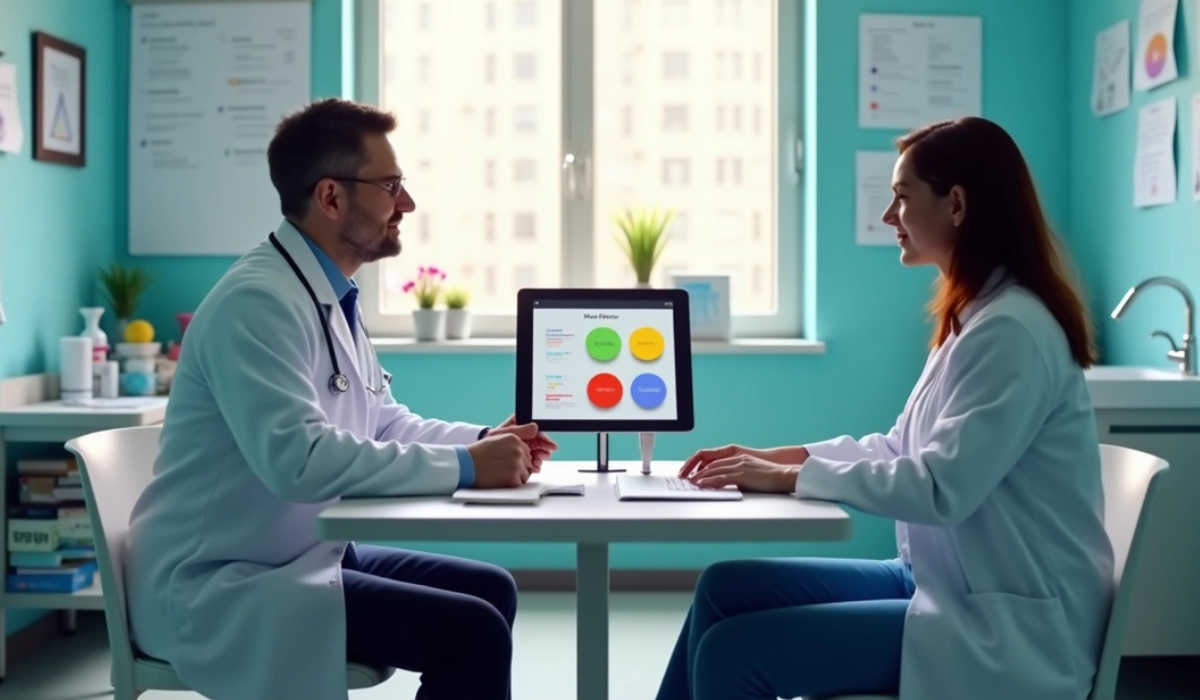
Patient feedback directly affects healthcare outcomes. High satisfaction levels lead to improved health results, better medication adherence, and fewer hospital readmissions. Healthcare providers who actively listen to their patients see better communication results. One study showed groups with better provider communication had an 86% positive response rate compared to 80.5% in control groups.
The timing of this feedback plays a crucial role. Annual reviews have been the standard practice, but they rarely provide useful insights quickly enough. Care organizations face major challenges with their people-related issues – one in five list this as their biggest struggle. About 29% of them now see the value in continuous performance management systems. On top of that, live feedback creates “immediate wins.” These wins show patients that their voice matters and help build momentum for bigger improvement projects.
This piece dives into why daily patient feedback works better than yearly reviews in healthcare settings. You’ll learn how live patient feedback systems can revolutionize patient-provider relationships, improve satisfaction scores, and create a culture of continuous improvement. Healthcare organizations that struggle with old-school feedback methods might find this approach worth trying.
Why patient feedback in healthcare matters
Healthcare organizations now see patient feedback as the life-blood of quality improvement. Patients who provide feedback help identify current and potential medical problems. Their first-hand experiences are vital to develop better medical services.
The link between communication and patient satisfaction
Quality healthcare delivery depends on effective communication. Research shows that communication helps providers build therapeutic relationships with patients. This approach benefits patient-centered outcomes. Studies that look at both verbal and non-verbal communication strategies show positive effects on patient-centered outcomes of all types. These include satisfaction, care quality, and physical and mental health.
The quality of provider-patient communication directly shapes trust levels. Patients who see their communication with providers as high-quality tend to:
- Stick to treatment plans
- Get better health outcomes
- Feel more satisfied
Good communication helps control emotions and increases compliance. This leads to better health outcomes. Research shows a strong link between overall communication quality and patient satisfaction (r = 0.539, p < 0.001). Communication satisfaction reliably predicts patient satisfaction (R² = 0.287, p < 0.001).
Medical information delivery (r = 0.530, p < 0.001) and communication skills (r = 0.417, p < 0.001) strongly relate to patient satisfaction. This lines up with findings that patients value clarity about diagnosis, treatment options, medication information, and prognosis above other factors.
All the same, research shows worrying gaps in patient understanding. A survey found that while over 80% of doctors and patients agreed patients should ask about their condition, only 55% of patients got answers to these questions. More than 41.8% of patients didn’t understand why they needed medical tests, and 21.2% remained unclear about their medical conditions.
How feedback influences care quality and outcomes
Patient feedback systems create direct paths to improve quality across healthcare organizations. Service providers who analyze patient comments and concerns can improve health services quickly. This reduces medical errors and makes care processes better.
A good feedback system changes patient participation from passive to active involvement in diagnosis and treatment. Active participation creates higher compliance levels and better service quality.
The Journal of Hospital Management and Health Policy reports that good provider communication can reduce complications. Patients who reported positive nurse communication were 33% less likely to develop hospital complications. Those with severe injuries had up to a 56% lower readmission risk when they communicated well with providers.
Patient feedback helps create broader organizational improvements. A study looked at five years of feedback hotline data from a major tertiary hospital in China. It found yearly increases in patient-reported issues about care processes. Rather than showing declining quality, this trend showed growing public trust in the feedback system.
The study also found that after implementing service improvements based on patient feedback, complaints about clinical and relationship issues decreased. This shows how feedback systems can confirm service quality and prove that improvement strategies work.
Feedback systems need clear, easy-to-follow processes that enable quick actions. Two-way feedback channels where patients learn about actions taken based on their input encourage more meaningful feedback. Patients become more engaged partners in their care when they feel their views matter and create real improvements.
Annual reviews: why they fall short
Traditional annual patient feedback reviews fail to deliver value despite their wide use. Over the last several years of healthcare practice, these yearly systems have lost touch with modern patient care delivery needs.
Delayed insights and missed opportunities
The timing issues in traditional annual feedback systems make them less effective. Ward staff often receive feedback months after collection, making it outdated. This becomes a bigger issue when teams have already started fixing known problems, which makes the feedback useless rather than helpful.
NHS Friends and Family Test (FFT) data becomes less relevant when ward staff see it months after collection. A healthcare manager explained: “The stark reality is most frontline staff, and even most managers, don’t deal very well with the time to look at the kind of in-depth reporting we get back. We get reports back that are…very bulky documents and people can’t find time to read them, understand them, and use them”.
This timing gap creates real problems:
- Ward staff can’t recall specific situations when complaints arrive months after patient stays
- Annual surveys give insights long after events happened, when details are fuzzy and context is lost
- Problems surface in formal yearly reviews too late to make meaningful changes
Traditional performance management systems use outdated timelines. Modern healthcare doesn’t work on a 12-month cycle – teams change, priorities move, and goals evolve throughout the year. Senior leaders still expect ward staff to make improvements based on this delayed feedback.
Lack of practical data to improve daily operations
Annual reviews often don’t provide detailed, related information needed to make meaningful improvements. Many practitioners doubt survey data’s credibility and usefulness. Their concerns include:
- Representation problems – Surveys favor infrequent attenders and those with extreme views, while missing patients with literacy challenges, older individuals, single parents, and busy working adults
- Missing vital questions – Many surveys skip questions about patient understanding of medical conditions, medication side effects, treatment options, and what it all means
- Insufficient context – Numbers without stories provide limited guidance to improve
- Practice-level (not provider-level) feedback – Teams find it hard to identify specific areas to improve without individual practitioner data
These limitations make it hard to use annual feedback well. About 60% of respondents who think their company’s performance management system works reported better results than peers over three years – almost triple the number of those who saw their system as ineffective.
Healthcare teams need clear, practical insights to make improvements. Data becomes overwhelming and messy without proper context. This slows decision-making and breaks up care delivery.
Data silos prevent teams from seeing the complete patient experience. Without integration, navigation efforts become disconnected and don’t address patient needs fully.
Research shows organizations spend more time collecting data than using it to improve quality. This shows a gap between gathering information and making meaningful changes. Leaders must understand the data, share findings with everyone involved, help staff interpret information, and create ways for all stakeholders to cooperate on improvement plans.
The power of real-time patient feedback
Real-time patient feedback changes how healthcare facilities respond to patient needs. This new approach transforms traditional quality improvement methods. Static annual surveys have given way to a continuous improvement cycle that helps both providers and patients.
What is real-time feedback?
Real-time feedback captures patient viewpoints during their healthcare visit or right after. Healthcare professionals call this near real-time patient experience feedback (NRTPEF). This method differs from traditional approaches that collect insights weeks or months after care episodes.
Digital tools now capture patients’ thoughts, experiences, and concerns about service and care at the point of interaction. These systems create formal communication channels that record how patients feel about quality, accessibility, and continuity of care.
Healthcare teams can now fix issues right away instead of waiting for yearly reviews. They get practical insights they can use immediately—sometimes within hours of seeing a patient.
Examples of real-time feedback in action
Healthcare organizations have tried different real-time feedback methods with great success. One system sent daily computer-generated emails to providers. These emails showed their performance on Hospital Consumer Assessment of Healthcare Providers and Systems (HCAHPS) questions, along with peer performance metrics and Medicare benchmarks. This simple change led to better scores for clear explanations and respectful treatment of patients.
Another creative system used an “edutainment” platform called GetWellNetwork. It gathered real-time feedback through a “Daily Pulse Measure” question. Patients who gave negative responses got follow-up questions about their concerns. Unit leaders received email summaries of these responses right away to address any issues.
Digital technology works well for collecting quick feedback. Healthcare staff prefer touchscreens, tablets, and web platforms because they reduce feedback collection fatigue. Cancer patients showed better physical well-being when they used weekly electronic questionnaires with built-in advice systems. This improvement came without adding to hospital workload.
Benefits for both patients and providers
Real-time feedback systems give patients clear advantages. Staff can address concerns immediately, which eases patient discomfort and shows that their opinion matters. Patients see faster solutions to service issues, often before leaving the facility. Quick responses to feedback can turn negative experiences into positive ones, showing true dedication to patient care.
Healthcare providers see equal benefits from these systems. Studies show that real-time patient feedback with peer comparison helps improve provider HCAHPS scores. Units that spent time addressing negative feedback saw their overall scores improve. Quick feedback helps find and fix inefficient processes throughout healthcare facilities.
Real-time feedback gives detailed complaint data and lets staff fix service problems early—before they grow larger. This quick response reduces recall and nonresponse bias issues common in traditional feedback methods. Healthcare organizations can spot recurring problems they might miss otherwise.
Patients trust their healthcare providers more when they see their feedback creates immediate changes. This trust builds strong patient-provider relationships that end up improving health outcomes and boosting the organization’s reputation.
8 reasons daily feedback beats annual reviews
The facts speak for themselves: daily feedback creates advantages that yearly reviews can’t match. Research shows that real-time patient feedback systems give healthcare organizations clear benefits. These systems boost care quality and patient outcomes.
1. Faster response to patient concerns
Real-time feedback lets healthcare teams fix issues right away—often before patients leave the facility. Quick responses stop frustrations from becoming formal complaints or negative online reviews. Unlike yearly reviews, daily feedback helps teams perform “service recovery.” They can solve problems while patients are still receiving care and turn bad experiences into good ones.
2. Improved provider communication
A breakthrough study revealed that providers who got daily performance feedback emails showed better communication scores. The number of “always” responses to provider communication questions was higher in the test group than the control group (86% vs 80.5%). The improvement showed up in all provider types, whatever their work arrangement with residents.
3. Higher patient satisfaction scores
Numbers paint a clear picture. Healthcare facilities that use real-time feedback systems see 15% higher HCAHPS scores. Teams that make use of information from instant patient satisfaction tracking cut unhappy customer numbers by 30% in just one year. These gains lead straight to financial rewards through value-based purchasing programs.
4. Better team accountability
Daily feedback builds systems that strengthen accountability across healthcare organizations. To name just one example, morning huddles let team members share current patient concerns. Teams can assign specific follow-up tasks and track solutions through visual management systems. This approach helps frontline staff spot and fix issues before they grow.
5. More accurate performance tracking
Daily feedback gives detailed and precise performance data while boosting accountability. Studies confirm that sharing targets along with performance feedback works better than either method alone. This combination helps both high achievers and struggling physicians by setting clear measures and meaningful peer comparisons.
6. Easier identification of training needs
Daily feedback patterns quickly show where training is needed—issues that might take months or years to spot in yearly reviews. Comments about rushed visits or unclear directions point right to specific training needs. Healthcare organizations can then create custom staff development programs that tackle real patient concerns.
7. Stronger patient-provider relationships
Trust between patients and providers grows through steady, positive interactions. A good patient-physician relationship relates directly to better adherence to medical advice, fewer symptoms, and reduced medical errors. Patients who don’t trust their providers are nowhere near as likely to follow prescribed treatments—even life-saving medications.
8. Continuous improvement culture
The biggest benefit might be how daily feedback encourages an organizational mindset of constant growth. Continuous Quality Improvement (CQI) runs on a cycle where teams make changes, measure results, and fine-tune processes until they achieve the best outcomes. This represents healthcare’s biggest cultural change—moving from fixing problems to pursuing excellence.
Daily patient feedback changes healthcare delivery from a yearly review cycle to a responsive system that grows with patient needs. This fundamental change shows what a world of patient-centered care looks like.
How to implement a daily patient feedback system
A good daily patient feedback system needs careful planning and execution. The right technology and team training play vital roles to create a green process that gives applicable information.
Choosing the right tools and platforms
The first step is to understand what your organization needs before picking feedback collection tools. Digital solutions work best for modern healthcare facilities. These tools can collect feedback through email, SMS, WhatsApp, and web links. You should check if your system needs to merge with existing Electronic Health Records (EHR) to make data collection and analysis easier.
Here’s what to look for in feedback platforms:
- HIPAA compliance and data security – Patient data protection must come first
- Scalability across multiple locations – The system should work well for one clinic or many sites
- Up-to-the-minute alerts for negative feedback – Teams can respond fast to complaints
- Survey customization options – Design features help track the entire patient trip
Many doctors suggest adding feedback features right into patient portals. Questions can pop up after healthcare visits. On top of that, digital platforms often get more honest feedback. Patients feel more at ease sharing concerns when they’re not face-to-face with staff.
Training staff to collect and use feedback
Staff training makes or breaks successful implementation. The core team should help design the feedback system. This creates ownership and cuts down resistance. Research shows that staff who take part in picking feedback methods feel more confident and use the system more.
Training programs need to cover:
- Skills to understand data trends
- Better communication to collect verbal feedback
- Ways to handle negative comments well
- Steps to handle urgent concerns
A good approach uses two training sessions six weeks apart. The first covers theory and patient experiences. The second lets healthcare staff talk about their feedback collection experience and get coaching from peers.
Staff need to see how feedback creates real changes. This shows the value of their work. This “feedback loop” connects their efforts to better patient care.
Integrating feedback into daily workflows
Patient feedback should merge naturally with existing routines. Adding feedback collection to daily tasks cuts down extra work for staff. Performance improvement coordinators help explain results to clinical unit managers.
Try these practical strategies:
- Hold regular ward meetings about feedback results
- Set up alerts for negative feedback
- Track how issues get fixed with visual systems
- Send regular emails about feedback options to patients
Some healthcare providers worry about getting feedback during busy days. You can collect patient feedback during specific times when these features are active. More than one feedback channel helps since not every patient likes giving written feedback online.
Dashboard displays help compare departments and track trends. This turns scattered data into applicable information that improves patient care.
Overcoming challenges in collecting patient feedback
Patient feedback systems can face obstacles that reduce their impact, no matter how good their design is. Healthcare facilities need to know these challenges beforehand to create strategies that keep patients involved while maintaining accurate data.
Avoiding feedback fatigue
Patients often lose interest in completing feedback questionnaires because surveys are too long, topics are complex, or they get too many requests. This affects how much data we collect and its quality, which can lead to misleading results for both individuals and organizations.
Here’s how to curb survey fatigue:
- Shorten your surveys – Many popular patient-reported outcome measures now have verified shorter versions. The HOOS JR uses just six questions instead of the original 42-question format
- Coordinate with other entities – Hospitals, practices, and payers should share data through agreements so patients fill out one survey while everyone gets the results
- Rotate focus areas – Ask about different aspects of care at different times rather than everything at once
- Explain the value – Capture rates go up when doctors explain how feedback makes care better, even with long 80+ question surveys
Ensuring data privacy and compliance
Patients often hold back honest feedback due to privacy worries. Many doubt their responses stay anonymous, especially when they criticize specific staff members.
HIPAA makes collecting patient feedback tricky. Healthcare organizations need strong encryption, secure storage systems, and staff who know how to handle data properly. Regular security checks help stay compliant and build trust with patients.
Healthcare providers must be careful when responding to online reviews because mentioning someone as a patient without permission breaks HIPAA rules. Some providers paid penalties between $10,000 and $50,000 for sharing protected health information in their review responses.
Handling negative feedback constructively
Negative feedback can be hard to hear but gives us chances to grow. A professional response starts with real acknowledgment and a thoughtful reply.
Listening carefully helps us understand the patient’s viewpoint fully before we respond. This means reading comments carefully without jumping to conclusions.
Good solutions show we’re serious about getting better. After saying sorry and showing we understand, we should explain the specific steps we’re taking to fix things, like reviewing processes or training staff. Making real changes based on what patients say builds trust because they see their input matters.
Conclusion
This piece explores why daily patient feedback works better than traditional annual reviews in healthcare settings. The data shows that up-to-the-minute feedback creates instant opportunities to fix service issues. This approach deepens patient-provider relationships and trust. Healthcare facilities that use daily feedback systems see about 15% higher HCAHPS scores. They also report 30% fewer unhappy patients in just the first year.
Daily feedback completely changes healthcare delivery. Teams can now fix problems before patients leave the facility. This hands-on approach stops small issues from turning into formal complaints. It also spots training needs much earlier than all but one of these yearly reviews could. The providers who get daily performance feedback show much better communication scores—86% compared to 80.5% in control groups—whatever their practice type.
Healthcare organizations that don’t deal very well with old feedback methods should think over moving to real-time systems. Some challenges exist like survey fatigue, privacy concerns, and handling negative feedback. These hurdles are nowhere near as significant as the benefits. Of course, picking the right digital tools, training the core team well, and fitting feedback into existing workflows need original investment. The resulting culture of ongoing improvement pays off through better team accountability, more precise performance tracking, and ended up delivering better patient outcomes.
The radical alteration from reactive, yearly reviews to quick, daily feedback shapes healthcare’s future. Patients who feel heard and see their suggestions driving real changes become involved partners instead of passive recipients of care. Daily feedback enables both providers and patients to create healthcare environments where excellence becomes normal rather than unusual.
Key Takeaways
Daily patient feedback transforms healthcare delivery by enabling immediate response to concerns and creating stronger patient-provider relationships that drive measurable improvements in care quality.
• Real-time feedback delivers immediate results: Healthcare facilities implementing daily feedback systems report 15% higher satisfaction scores and 30% fewer dissatisfied patients within the first year.
• Communication improves significantly with daily feedback: Providers receiving daily performance updates show 86% positive communication scores compared to 80.5% in control groups across all practice types.
• Annual reviews create costly delays: Traditional feedback arrives months after patient encounters, making insights outdated and preventing timely service recovery when issues can still be resolved.
• Implementation requires strategic planning: Success depends on choosing HIPAA-compliant digital tools, training staff to interpret data effectively, and integrating feedback collection into existing workflows.
• Continuous improvement culture emerges: Daily feedback shifts healthcare from reactive damage control to proactive excellence, enabling teams to identify training needs and address concerns before they escalate.
When patients see their feedback driving tangible improvements, they become engaged partners rather than passive recipients of care, creating healthcare environments where excellence becomes the standard rather than the exception.